
How to Measure for a Wooden Gate
Measuring for a gate is easier than you might think. This guide walks you through the key steps, checking the opening width and height, allowing for posts, and making sure the gate has enough clearance to open smoothly.With a few quick measurements, you’ll have everything you need to order the right size with confidence.
Measuring the Width
Measure the width of the opening at the top, middle, and bottom. Note all three measurements and use the smallest — this ensures the gate will fit even if the walls aren’t perfectly straight.
Decide which wall posts you’ll be using to hang the gate, typical thicknesses are:
• 45mm posts (standard for most side gates)
• 70mm posts (better for heavier or wider gates and larger hinge plates)
• 95mm posts (for very large gates or when a chunkier look is preferred)
Allow for a small clearance gap on each side of the gate so it can swing freely and continue to operate with natural seasonal movement. A 10mm gap on each side works well — large enough for smooth operation, small enough to remain discreet. These gaps can be later covered by slamming strips / beads.

Calculate your required gate width
Opening width
Minus wall posts (2 x 45 mm)
Minus side gaps (2 × 10 mm)
860 mm
- 90 mm
- 20 mm
Required gate width
= 750 mm
Measuring the Height
Although height is generally more flexible than width, it’s still helpful to understand a few basics so you can gauge how tall the gate will look in your setting. In most cases, choosing the height is simply a matter of preference — whether you want a shorter or taller gate. However, more attention is needed if your opening has a lintel, archway, or existing frame.
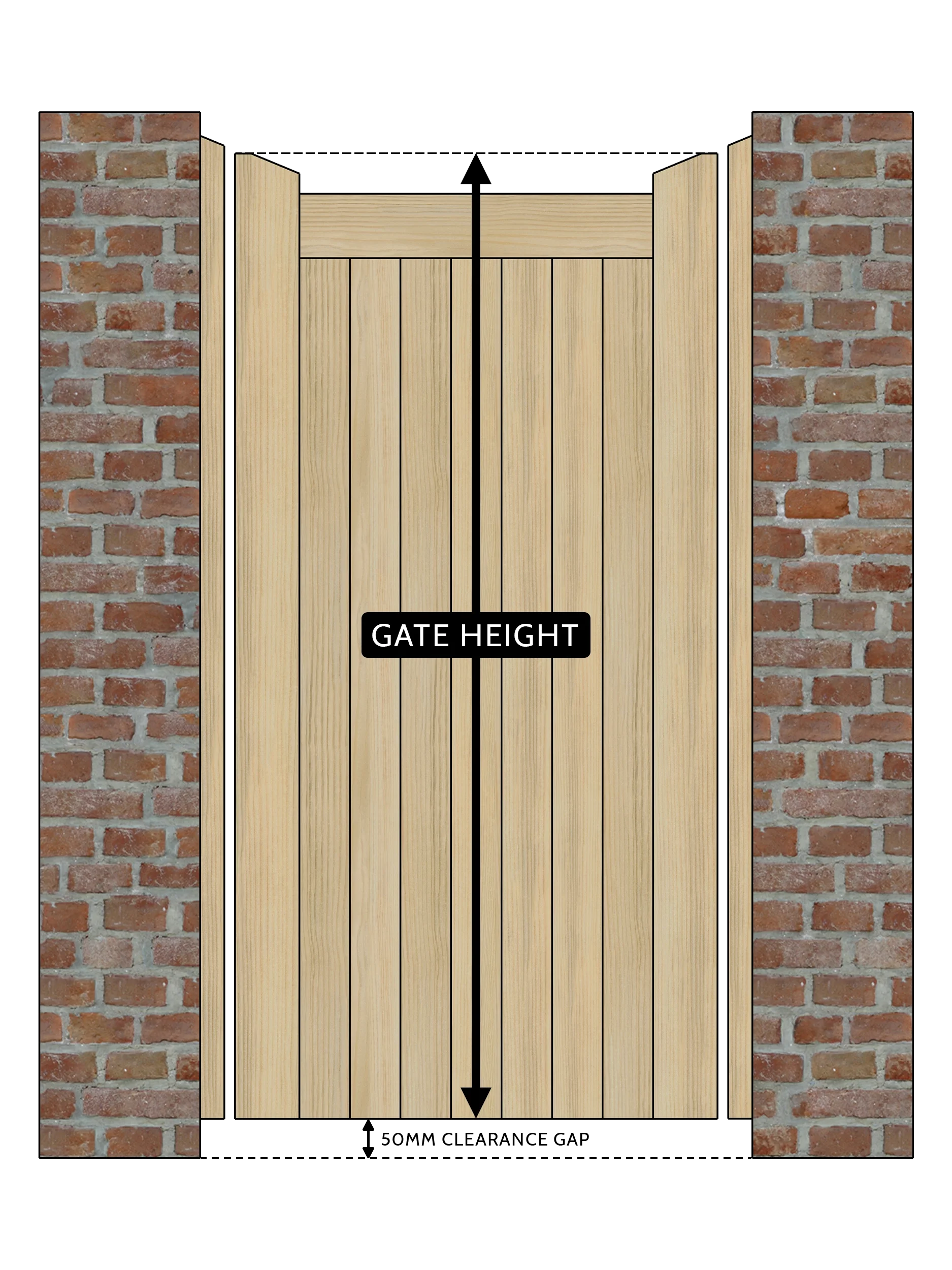
Once installed, gates should never sit directly on the ground. A standard 50mm clearance gap from the highest point of the ground to the bottom of the gate should be allowed. This works well for most installations, preventing the gate from scraping the ground, while keeping the gap modest.
If the ground slopes upward in the direction the gate opens, you may need additional clearance. You can check this by placing a straight piece of timber or spirit level on the ground and following the opening arc. If the slope is significant, it may be better for the gate to open the opposite way.
If your gate sits under a lintel, frame, or archway, allow a small top gap depending on your preference. If the top is completely open (posts only), no top clearance needs to be considered.
All Grovewood gate hight sizes refer to the overall height of the gate from the bottom to its tallest point, which is usually the top of the stiles.
Ready to Get Started?
Whether you’re interested in a wooden gate, log store, or another bespoke item, Grovewood can help. Get in touch to discuss your requirements or request a made-to-measure quote.